
Varada P
UX/UI Designer
No-code Developer
Freelancer
Brand Designer
Dog Lover
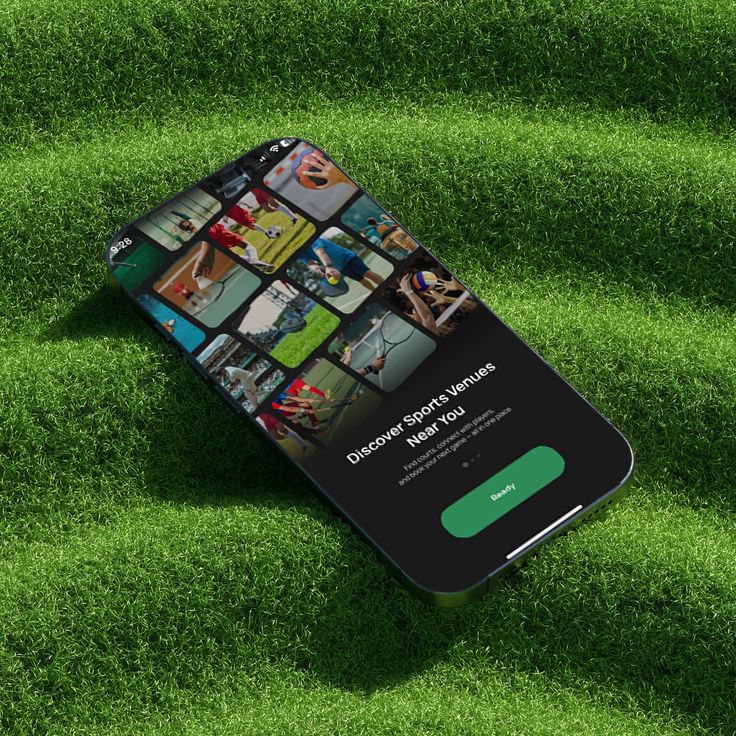
PlaySpots
Find your game. Book your slot. Play without hassle.
Project Summary
Challenge Booking a sports venue should take less time than warming up. Instead, users were navigating cluttered interfaces, unclear availability, and multi-step flows that killed the impulse to play before they even got started.
Strategy Redesign the PlaySpots app around a single principle: get the user from "let's play" to "slot confirmed" in as few steps as possible with real-time availability, trust-building venue details, and a reward system that keeps them coming back.
Results A fast, focused booking experience that reduces friction at every stage from discovery to payment built on a strong usability foundation and a visual language that feels as energetic as the sport itself.
Background
Sports venue booking in India is a fragmented, frustrating experience. Group chats go back and forth trying to align everyone's availability. Players switch between apps to compare venues, check slots, and split payments. By the time a booking is confirmed, half the enthusiasm is gone.
PlaySpots exists to solve this. The app helps users discover, book, and manage nearby sports venues across multiple sports quickly, confidently, and without the back-and-forth. This case study documents the redesign of the PlaySpots Lite App, with a focus on improving usability, simplifying the booking flow, and handling real-world user scenarios more effectively.
Understanding the Problem
What the booking experience actually feels like
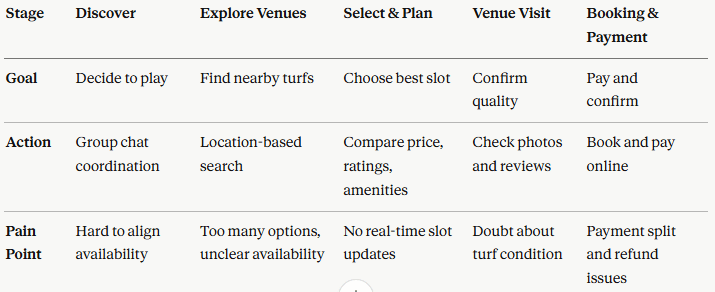
A typical booking journey starts in a WhatsApp group someone suggests a game, availability gets discussed, and by the time there's agreement, the urgency to act is already fading. Users then open an app, search for nearby venues, scroll through options with incomplete information, and hit a booking flow that asks for more steps than expected.
At each stage, there are friction points that the design needed to directly address.
"I want to book a sports venue quickly. Show me nearby options. I need clear slot availability."
"Is this venue available at my time? Can I finish booking in a few steps? Are there any offers or rewards?"
The frustration isn't with the concept of booking online it's with how long it takes and how much uncertainty it carries. Users feel confident when availability is clear and satisfied after a quick, easy booking. The design needed to manufacture that confidence from the first screen.
Target Audience
Competitive Landscape
A review of three leading platforms revealed a consistent pattern: the more features an app adds, the slower the core booking flow becomes.
Playo Strong community features and venue discovery, with a social layer that lets users join games. But the feature-heavy interface works against users who just want to book quickly — there's too much to navigate before reaching the action.
Strengths: Community-driven, wide venue network, slot booking. Limitations: Complex interface slows quick bookings, community features can distract from the core flow.
Hudle Clean venue discovery with a solid focus on facility management and real-time availability. The more functional of the three — but limited rewards and personalisation mean little reason to return.
Strengths: Easy discovery, availability-focused, facility management tools. Limitations: Limited rewards, minimal personalisation, lower engagement over time.
KheloMore Broad in scope — covering venue booking, coaching, and academies across multiple sports. The range is impressive, but the complexity it creates makes quick bookings unnecessarily difficult.
Strengths: Multi-sport coverage, coaching and academy integration. Limitations: Complex flow, not optimised for users seeking quick, casual bookings.
The gap
All three platforms treat booking as one feature among many. PlaySpots treats it as the product. Speed, clarity, and real-time availability — the things users actually need — become the primary design priorities, not secondary ones.
User Journey
A seamless path from "let's play" to "slot confirmed."

Design Process
Discover → Define → Design → Deliver
Strategy
Speed as the core design value
Every screen was evaluated against one question: does this slow the user down or speed them up? The booking flow was stripped to its essential steps select sport, choose slot, confirm, pay. No unnecessary detours.
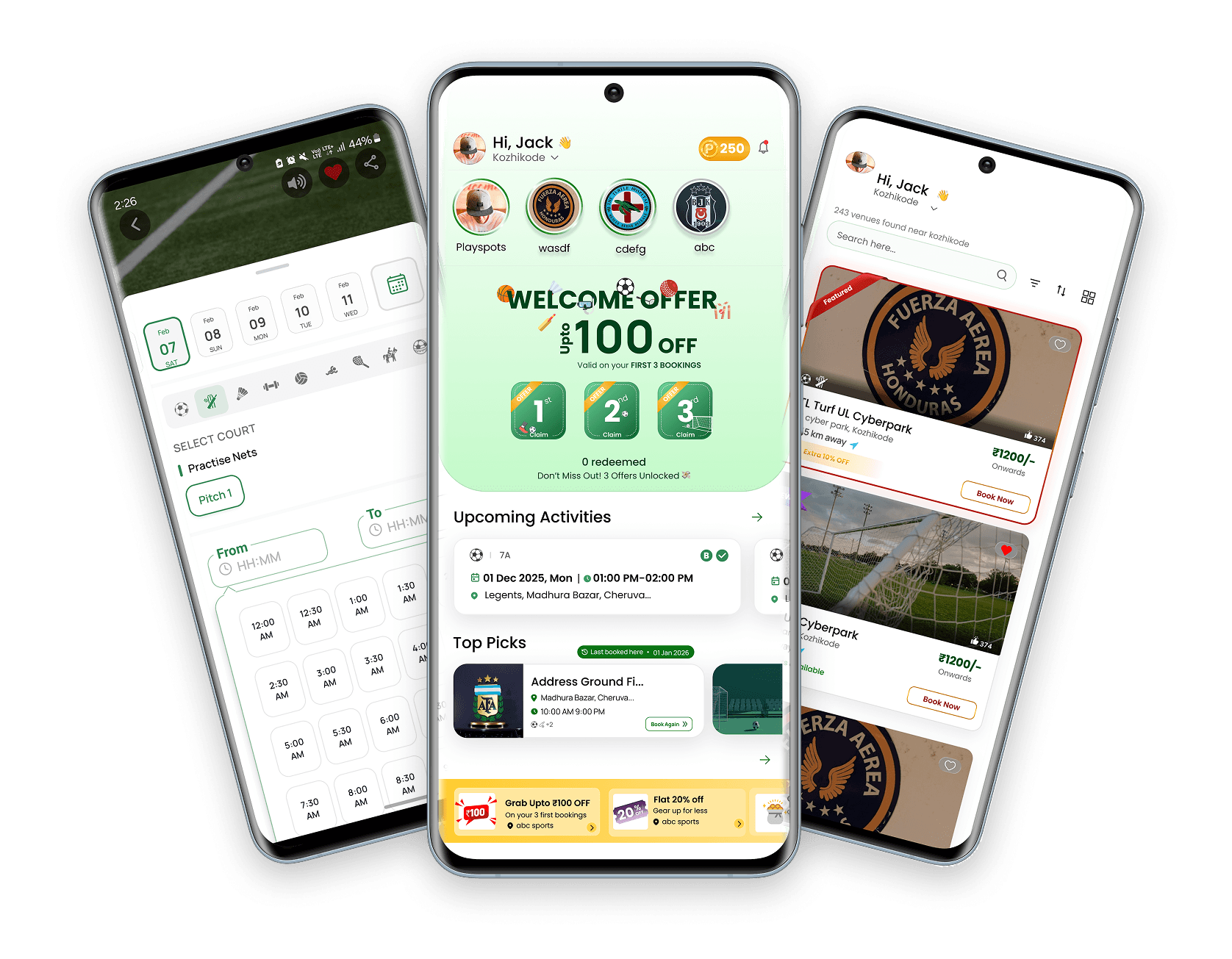
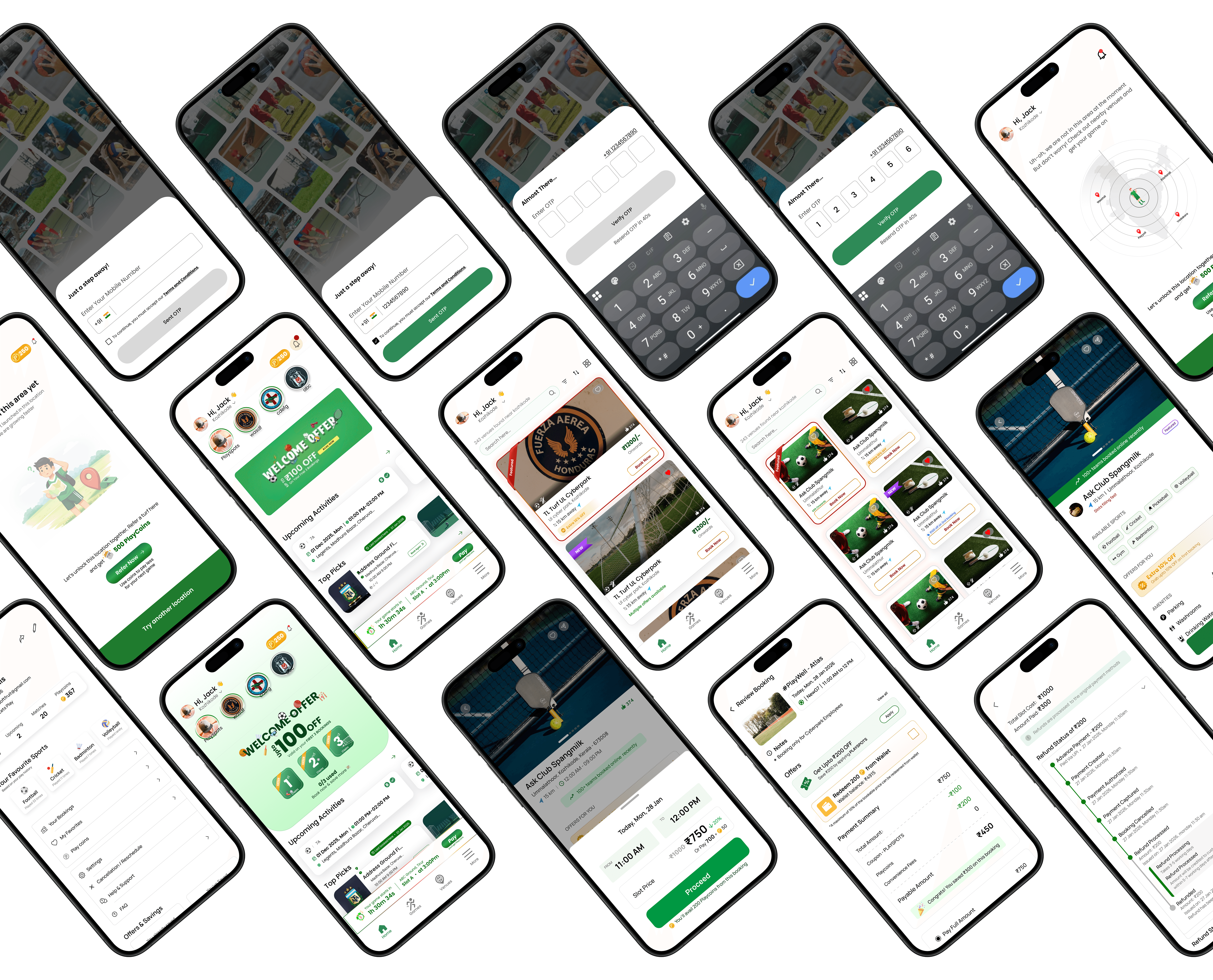
Location-first discovery. The home screen surfaces nearby venues immediately, sorted by distance and availability. Users don't search they see.
Real-time slot visibility. Availability is shown at the venue card level, before the user even taps in. The moment of uncertainty "is my time slot even available?" is resolved in the feed, not buried inside a detail page.
One-screen booking. Sport, slot, and offer application happen on a single screen before proceeding to payment. Fewer transitions mean fewer drop-offs.
Trust signals built into discovery
Venue quality anxiety — "will the turf actually be good?" is one of the most common reasons users hesitate before booking. The redesign surfaces real photos, ratings, and reviews at the discovery stage, not just on detail pages. Users build confidence while browsing, so by the time they tap "Book Now," the decision is already made.
Rewards that create return behavior
PlayCoins — the in-app reward system were integrated directly into the booking flow as an offer-application step. Rewards visible at the moment of payment convert better and create a stronger habit loop than rewards discoverable only in a profile section.
Visual Design
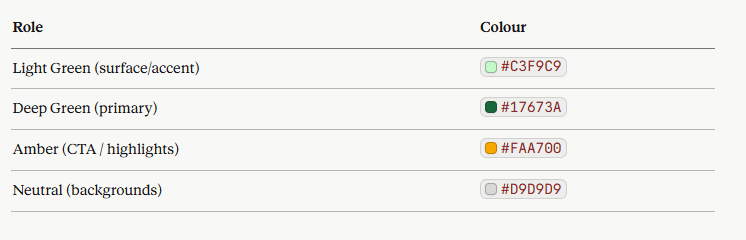
Colour Palette
Inspired by outdoor sports, turf fields, and active play energetic without being aggressive. Deep green anchors the brand and drives primary actions. Amber creates energy on CTAs and offers. Light green provides a fresh, sporty surface tone throughout the interface.
Typography — Manrope
A geometric sans-serif chosen for its contemporary feel and exceptional mobile readability. Fast scanning of slots, prices, and venue names is the primary use case — Manrope handles all of it cleanly.
Iconography
Icons were sourced through the Iconify plugin in Figma, supplemented with sports-specific visuals from Flaticon. Consistent stroke weight and style are maintained across all icons clear and legible at small mobile sizes, aligned to the minimal UI language throughout.
User Flow
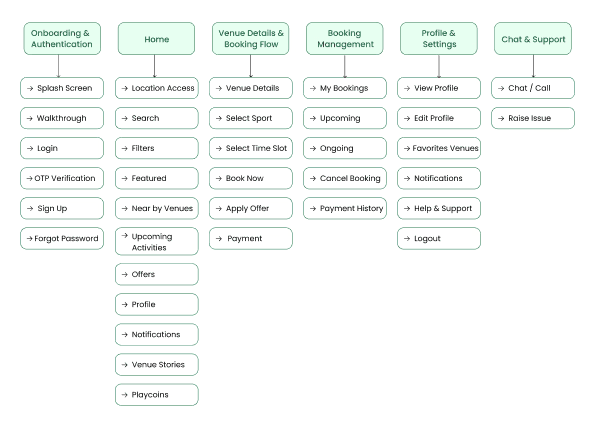
The complete app architecture covers six primary areas:
Onboarding & Auth — Splash, walkthrough, login, OTP verification, sign up, password recovery, location access.
Home — Search, filters, featured and nearby venues, upcoming activities, offers, notifications, profile, PlayCoins.
Venue Details & Booking — Venue stories, sport selection, slot selection, offer application, payment.
Booking Management — Upcoming and ongoing bookings, cancellation, payment history.
Profile & Settings — View/edit profile, favourite venues, notifications, help and support, logout.
Chat & Support — In-app chat/call, issue raising.
User Flow
The complete app architecture covers six primary areas:
Onboarding & Auth — Splash, walkthrough, login, OTP verification, sign up, password recovery, location access.
Home — Search, filters, featured and nearby venues, upcoming activities, offers, notifications, profile, PlayCoins.
Venue Details & Booking — Venue stories, sport selection, slot selection, offer application, payment.
Booking Management — Upcoming and ongoing bookings, cancellation, payment history.
Profile & Settings — View/edit profile, favourite venues, notifications, help and support, logout.
Chat & Support — In-app chat/call, issue raising.
High-Fidelity Screens
Impact
The redesign directly addresses the root causes of booking drop-off uncertainty about availability, too many steps, and no reason to return. Real-time slot visibility removes hesitation at discovery. A stripped-back booking flow reduces the gap between intention and confirmation. PlayCoins integrated into the payment step creates a habit loop that commercial platforms often miss.
The result is an app that feels as effortless as the decision to play and that's the right standard for a product in this space.
Learnings
Speed is the product. In sports booking, every extra step is a reason not to follow through. Designing ruthlessly for speed isn't a constraint it's the brief.
Uncertainty kills conversions. Slot availability, venue quality, payment clarity every point of doubt is a potential drop-off. Surface the answers before users have to ask.
Rewards work best in context. A reward visible at the moment of payment changes behavior. A reward buried in a profile section doesn't. Placement is as important as the reward itself.
Simplicity requires decisions. The competitive landscape showed that feature additions compound complexity. Every feature added to PlaySpots was evaluated against whether it slowed down or supported the core booking action.
Visual energy should match the product. A green-and-amber palette, geometric type, and sport-specific iconography aren't decoration they prime the user for an active, confident state of mind before they've read a single word.